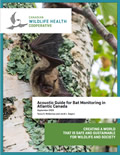
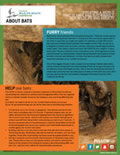
White-nose Syndrome (WNS) is a devastating wildlife health issue affecting North American bat populations. It is estimated that over six million bats have died due to WNS since its discovery in 2006, with some experts fearing that bats may become extinct in some regions. WNS is caused by Pseudogymnoascus destructans (Pd), a fungus that grows on the skin of the bat, producing a fuzzy, white appearance on the muzzle, wings and ears, giving the condition its name. Infection of the skin of the wings has a detrimental effect causing over-wintering bats to exhaust their energy reserves before food becomes available in spring. This fungus, which is not native to North America, is the primary, but not the only threat, bat species are facing. Others include habitat loss, pesticide use and various means of direct harm. Given their significant role in regulating pest insect numbers, such a drastic decline in bat numbers can have a significant adverse impact on the environment and the economy.
IThe CWHC is working with a range of partners to better understand WNS and other threats to bats, to inform others, and determine what can be done to slow the advance of WNS and mitigate other threats and ensure bats continue to be an important part of the environment. Since 2008 the CWHC has been conducting regular surveillance for the detection of WNS in Canada, and is involved in several research projects designed to better understand the disease and its spread. The CWHC is currently coordinating Canada's response to one of the most significant health issues ever faced by the wildlife community.
Jordi Segers, the CWHC’s white-nose syndrome scientific program coordinator can be contacted by phone at 902-566-0744, or by email at jsgers@cwhc-rcsf.ca.
Prevention is key when it comes to protecting bats from WNS. It is very important to prevent the accidental spread of the fungus that causes WNS by staying away from critical bat habitat, especially major hibernation sites, such as caves and mines. If it is necessary to access these areas, it is essential that clothes and equipment are properly decontaminated to ensure that fungal spores are not unintentionally carried from one place to another. Please consult our decontamination protocol for more information.
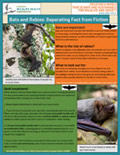
In addition to the unintended spread of Pd, it is also important to prevent the accidental transportation of potentially infected bats from one place to another. If you are driving long distances make sure to check your vehicle for stowaway bats. Bats like to roost in the umbrellas and awnings of RV campers and can sometimes be found in the corners and crevices of trailers and cargo holds. Before departing for a new destination, have a quick look to ensure there are no bats roosting in or on your vehicle. The public is advised not to touch any bats without the use of gloves. For more information, see our Bats Astray Program brochure.
Regulatory Considerations for Control of Wildlife Disease: Bat White-nose Syndrome Treatment Regulations Overview

WNS Decontamination ProtocolProtocole de décontamination national à suivre avant d'entrer dans un hibernacle de chauves-souris au Canada
WNS Decontamination Protocol - Two pagerProtocole de décontamination national à suivre avant d'entrer dans un hibernacle de chauves-souris au Canada - Deux pages

How to manage bats in buildings in Prince Edward Island (full) Comment gérer les chauves-souris dans les bâtiments sur l'Île-du-Prince-Édouard (complet)

A guide for conservation-minded bat exclusion in Prince Edward Island (12 pages) Guide d'exclusion des chauves-souris axée sur la conservation à l'Île-du-Prince-Édouard (12 pages)

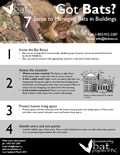
One-Page Infographic on managing bats in building - Prince Edward Island Infographie pour les chauves-souris dans les bâtiments sur l'Île-du-Prince-Édouard
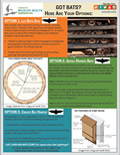
How to manage bats in buildings in Newfoundland and Labrador (full) T-N-L Guide pour les chauves-souris dans les bâtiments (complet)

A guide for conservation-minded bat exclusion in Newfoundland and Labrador (12 pages) T-N-L Guide pour les chauves-souris dans les bâtiments (12 pages)
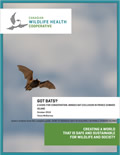
One-Page Infographic on managing bats in building - Newfoundland and Labrador T-N-L Infographie pour les chauves-souris dans les bâtiments
This content is intended for use by communicators and recreation departments (e.g., campground managers including National Park and Provincial Parks) to help you design custom pamphlets and formulate messages to the public to limit the risk of camper and campground users accidentally translocating stowaway bats. This content is provided to you in editable .ppt formats for your convenience.
Please note that before dissemination to the public, your custom edits are required (red text): logo, contact details and site specific instructions in particular. You may use any or all parts of this pamphlet as you see fit.